
Imposter Syndrome—that lingering feeling that you’re a fraud, just faking your way through life. Sound familiar? I’d bet most of us have felt this way at some point in our careers. Studies suggest that about a third of young people experience it, and honestly, I believe that (as an imposter myself). I’d even go as far as to say it’s even more common in tech, where things evolve so fast it’s easy to feel like you’re constantly playing catch-up. Wouldn’t it be great if we could find a way to overcome imposter syndrome and help people feel confident in their voices?
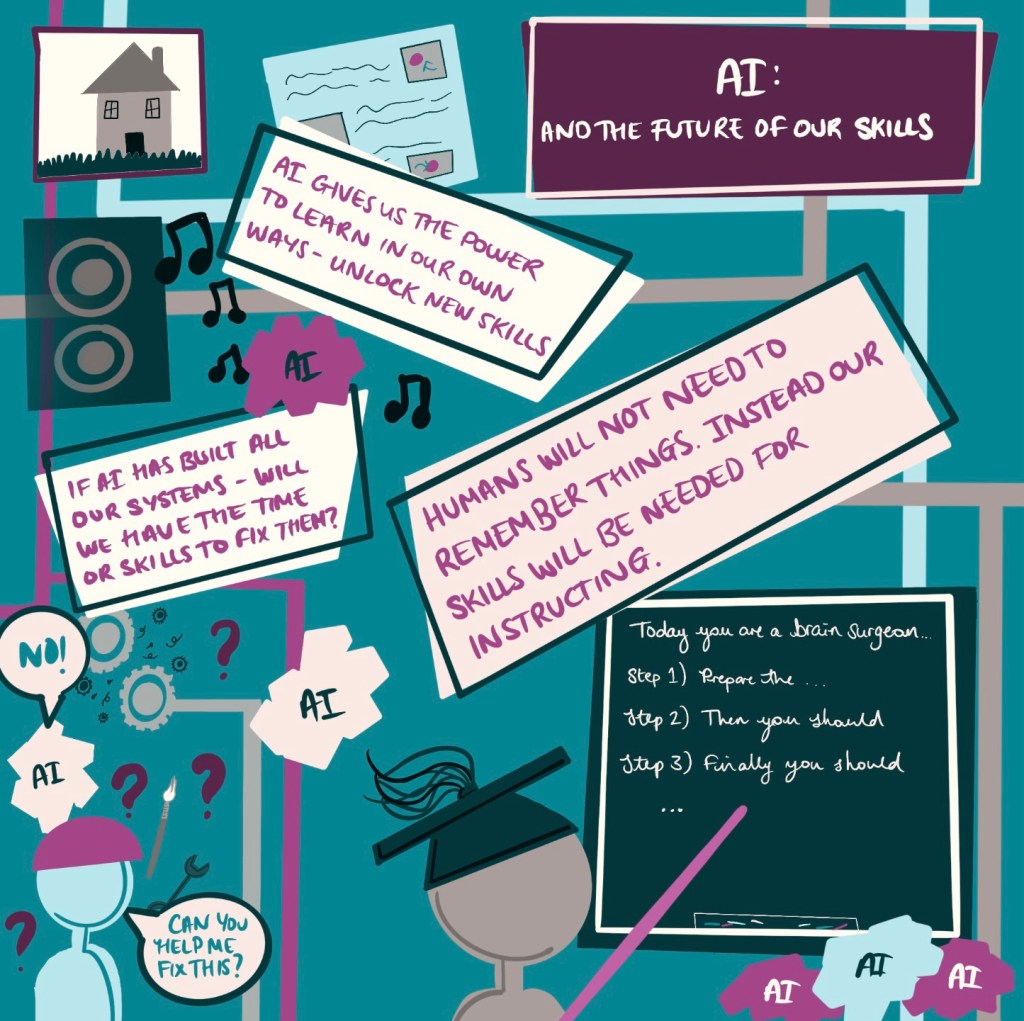
AI is already at the point where it can act as your personal advisor—helping you refine your words and grasp new concepts, making people feel more confident in their knowledge. So I thought it could be fun to imagine what it means to be an ‘expert’ in this world.
Today, let’s imagine a world where everyone confidently, frequently, and unapologetically uses AI to navigate their working life. With AI as a personal assistant, people can engage with a huge range of subjects—without necessarily being a ‘true’ expert. You could say this is a world where imposter syndrome is cured, where everyone feels confident in sharing their knowledge. But in actual fact, has the world just becomes full of imposters?
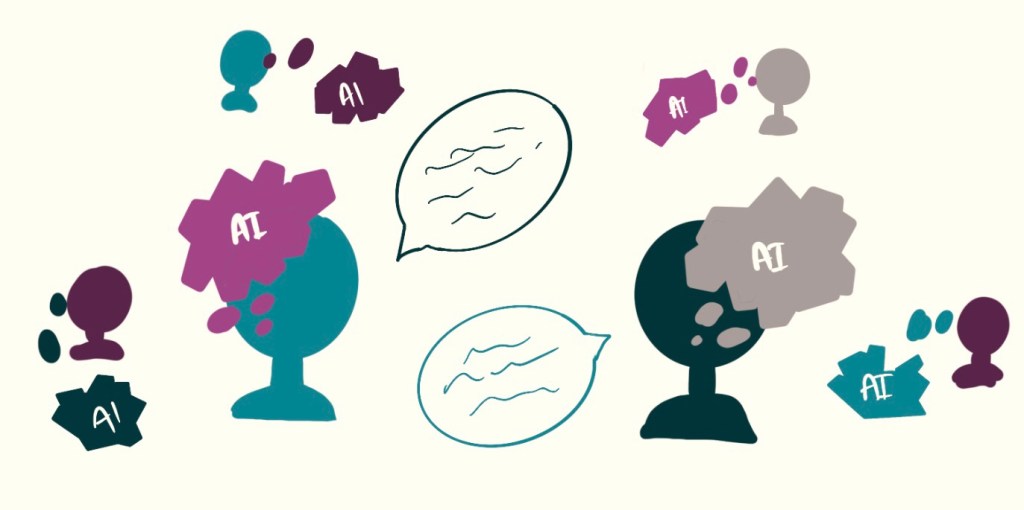
In this post, we’ll dive into a futuristic world, examining the benefits and challenges it presents for technical experts, as well as how their roles and skills could evolve. This is a new style post for me, and I’ve been inspired by Kurzgesagt to let my imagination run wild- so let me know in the comments if this is something you’d like to see more of! This will be the first in a series of posts exploring the future world and what challenges we might face.
Let’s step forward in time—to the not-so-distant future. Every person with the means to buy a smartphone now has a personal AI. You can talk to it, you can text it, it can see things. And in an exciting groundbreaking leap, you can interact with it just by thinking, thanks to the newly released neuro-chip!
In this world, future-us rely on AI for everything—chatting with others, learning new things, doing our jobs, planning our days, even managing home life. Thinking too hard? Not really necessary anymore.
The New Experts Just Know What To Ask
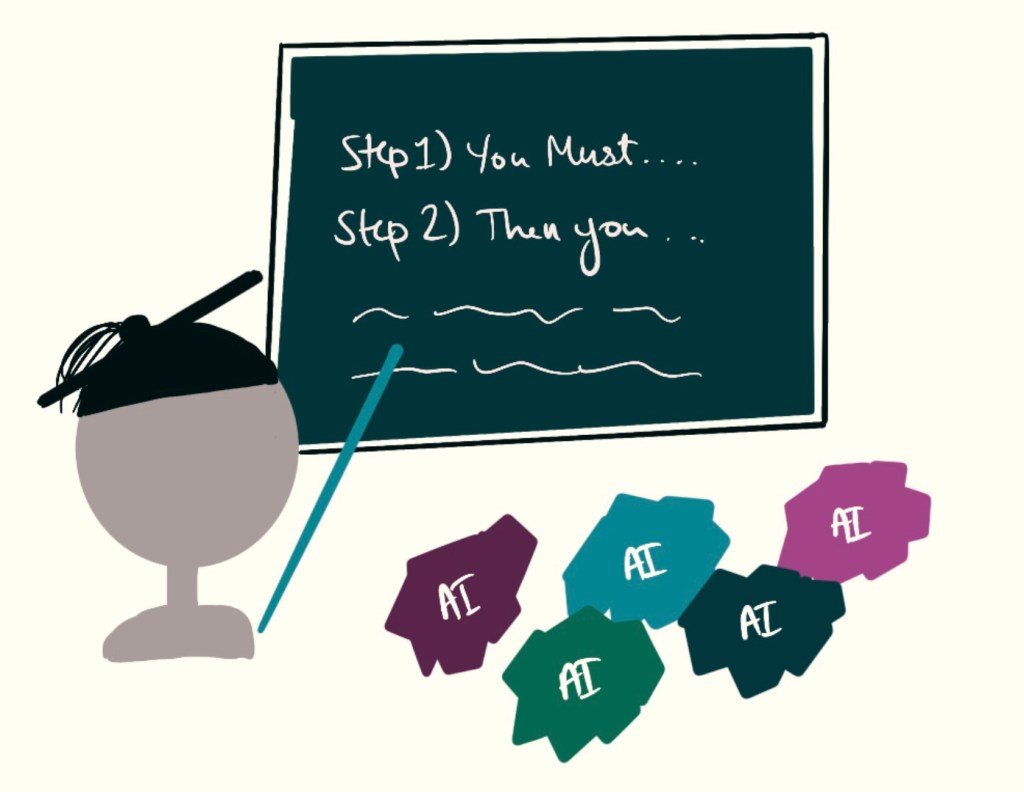
In this world, the real experts aren’t just those with extensive and specialised knowledge (which we consider experts today)—they’re the ones who understand how to ask the right questions and get the AI to act in the most valuable way. The experts will be those who know how to use AI effectively, breaking down tasks into manageable actions and explaining them precisely.
We can already see a shift in this direction – the birth of the prompt engineer role. In case you have never heard this term before, lots of tech companies started hiring people as prompt engineers, to understand how to write inputs you then ask an LLM for the best cooperation.
Expertise will shift from what you know to how well you use AI to do the knowing for you.
In my eyes, these experts will be the next-generation prompt engineers, mastering the art of instructing AI for a specific task. Rather than being experts in a field, they become expert AI application operators, knowing exactly how to frame problems and use AI most effectively. In a sense, expertise shifts from what you know, to how well you can direct AI to work for you.
Experts will Actually be Imposters
In this world, where the true experts are the masters of AI application, could we end up in a situation where the knowledge of these so-called experts becomes so diluted they know nothing? As they grow more reliant on AI to answer technical questions, will they lose the ability to retain any knowledge themselves? If their understanding weakens enough, how will they know when an AI-generated answer is wrong? Will they even be able to comprehend how the AI arrived at its conclusion?
Knowledge will only be Stored By the AI; Humans will know nothing
In this world, you could become an expert in nearly anything, and instantly, by just switching to the specific AI expert ‘plug-in’. “Today I am a doctor – let’s use the doctor plug-in”. “Tomorrow I need to fix my car, I will use the mechanic plug-in”. But there is no way that you will know all these subjects without your AI. You are out of practice memorising information – so you don’t. In this world, we are at risk of knowledge being lost – and at the mercy of the AI’s staying on and accurate.
Will We have the Knowledge to Fix Things?
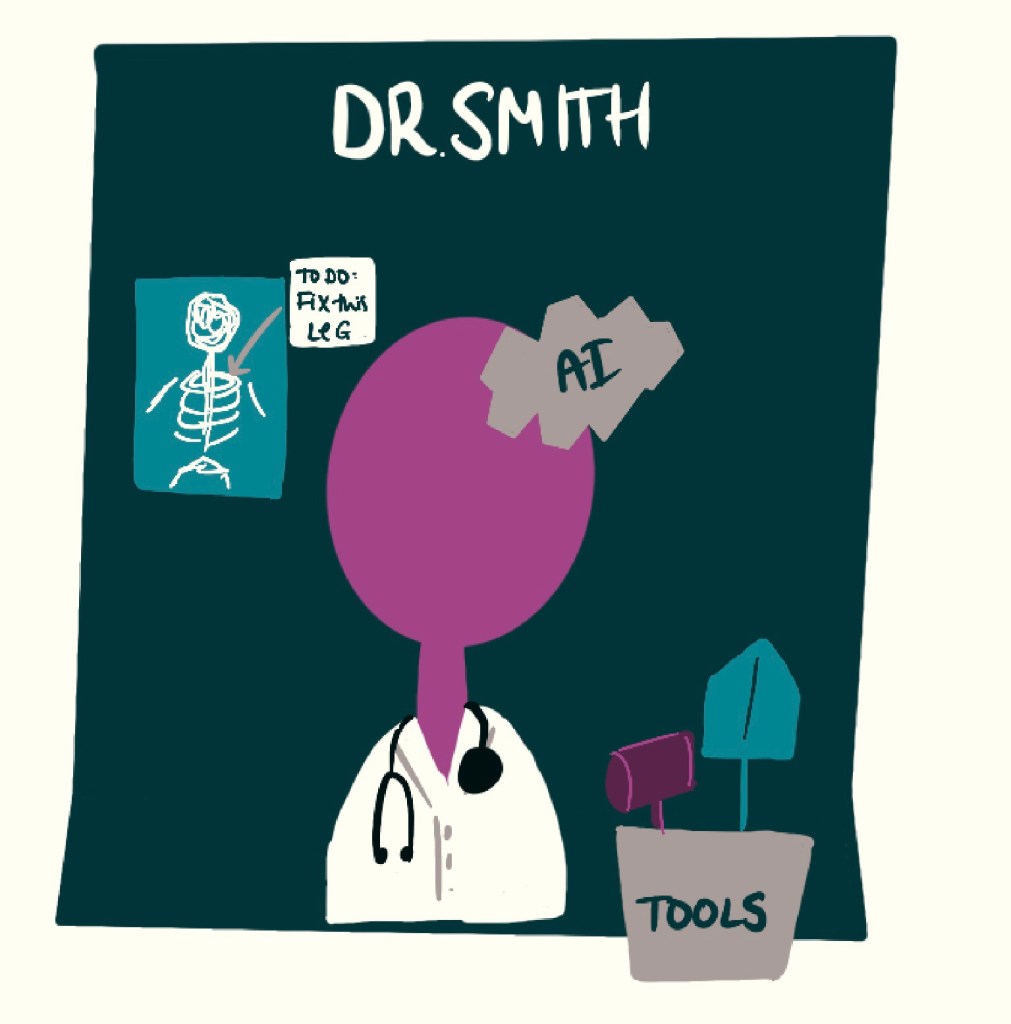
Imagine you are a cardiologist in the 2050s. In this world, it is standard practice for all doctors to consult AI during diagnosis. But what happens when a doctor can’t use their AI—or when they encounter a new disease? Without the foundational knowledge and problem-solving skills to navigate such situations independently, they may struggle to find solutions. Could this make us more vulnerable to pandemics or other global medical crises?
Now, imagine you are a software engineer, You use AI to speed up your workflow, allowing you to write far more code than before. Over time, as these assistants handle more of the work, your grasp of the basics may fade. If a piece of software is written entirely by AI, the engineers maintaining it will have less understanding of how it truly functions. Should something go wrong, they could find themselves at a disadvantage, leading to longer system failures and increased vulnerability to cyber incidents. This risk is even greater when dealing with critical infrastructure. Given how much of the world depends on software, it’s not far-fetched to imagine failures in core systems—banking, healthcare, education—where maintainers may struggle to respond quickly.
These are just two examples in two professions, but the same concerns apply across many fields—law, finance, education, pharmaceuticals, and beyond. If human expertise erodes due to over-reliance on AI, how might that impact the resilience of our society?
People Can Learn in Their own Way
It wouldn’t be all bad news. Let’s go back to how experts are created- by having a great and inspiring education.
In this world, everyone would have the opportunity to learn in a way that suits them best. They could ask for explanations in a style that suits them, free from embarrassment. They could explore topics beyond the limits of a traditional syllabus, diving into subjects that truly interest them.
Anyone can do anything, better education system?
Today’s education system is rigid—students follow a set syllabus, taught in a classroom by a single teacher. But with AI, we could rethink how students learn. Some students might prefer written content—AI can generate that. Others might learn better through visuals, videos, or even podcasts. AI could tailor its teaching style to each student’s needs—whether formal, funny, or packed with examples.
In this futuristic world, every child genuinely enjoys learning and, from an early age, discovers how they learn best—a fundamental skill that would benefit them for life. I am excited by this prospect of re-defined education!
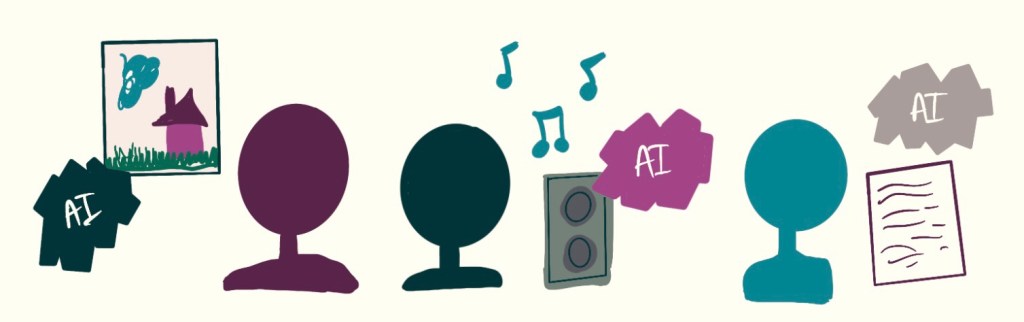
Happy and inclusive education
I imagine many more people can reach a much higher level of intelligence. There will be an opportunity for many more people to become experts.
With students able to explore subjects, will more people have the opportunity to find a career that suits them? I imagine many more people will be in careers that they are happy in.
Conclusions
This new world will feel much different to the world of today. I hope you don’t feel too disheartened at the end of this post. I’ve dramatised a lot of these points, but I do believe as a society we need to think of the worse case scenarios – and ensure that how we respond to AI is fair and responsible.

 The Algorithm Edit
Leave a comment