
Will talking to robots make you, a human, lose your emotional intelligence? As AI and technology dominate our lives, will our ability to form deep emotional connections with others begin to fade?
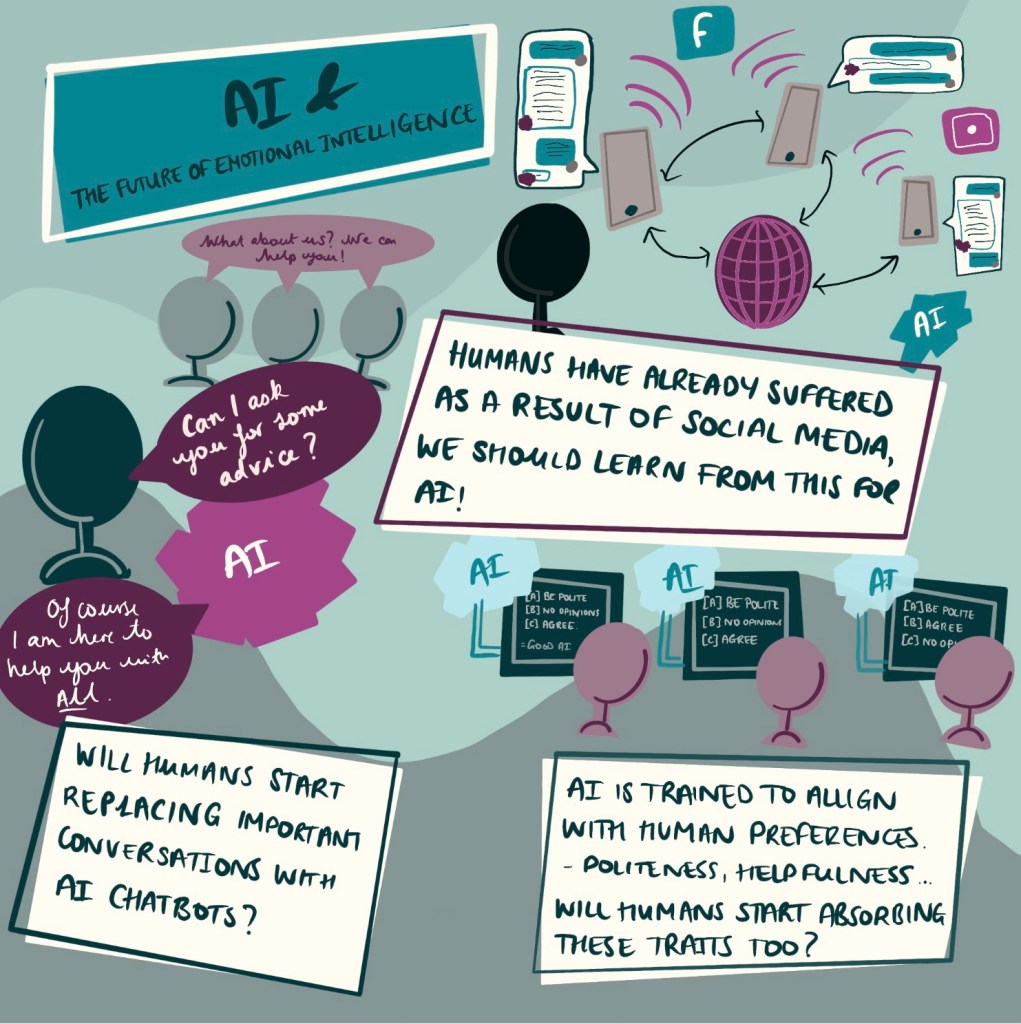
Welcome back to my future dreamworld, where AI has become essential to everyone’s life.
Last time, I explored how AI might reshape the roles of highly skilled professionals in the workforce. This time, I want to dive into something more personal: how AI could impact human emotional intelligence and our ability to connect with each other.
I’ve decided to write about this topic because recently, I’ve caught myself turning to ChatGPT for all kinds of questions—ones that, perhaps, I should have had with a real human.
For example, last week my day job (yes I don’t do this full time) was getting very stressful. I was finding it hard to concentrate. Instead of talking to my family, I turned to ChatGPT to help me come up with a schedule to help manage my workload. I hoped to get through the stressful week alone.
And yes it helped, it gave me an actionable schedule for that day – with clear goals and time limits. But I suddenly thought, this AI doesn’t know me. It doesn’t know my job, or my personal life or my own struggles. So yes it is giving some generic advice to help in the short term- but no it does not mean that I shouldn’t talk to my loved ones about my stress. This just got me thinking.
AI today can mimic emotions with startling accuracy. But what happens to human emotional intelligence when generations grow up forming deep emotional bonds with AI? Read on to hear how I feel AI might impact on our emotions in the future.
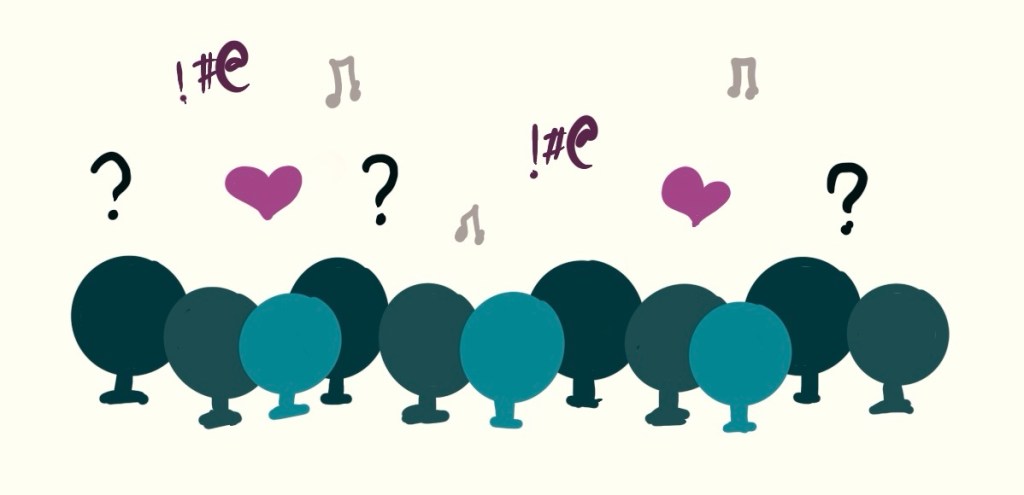
How will AI impact on human emotional connection?
Despite their impressive emotional intelligence, AI will never feel in the way humans do. No matter how sophisticated they become, they remain fundamentally different from us—biological versus artificial.
But as AI increasingly integrates into our lives, could we begin to forget what genuine human connection feels like? Conversations once shared with friends, family, or colleagues may increasingly be replaced by interactions with AI.
You might think, I’d never turn to AI for personal advice. But consider this—when you have a headache, do you immediately consult a doctor, or do you Google it first? We already seek advice from search engines, Reddit, Quora, and blogs. In a future where AI offers instant, personalised answers, wouldn’t we be even more tempted to rely on it over human interaction?
Over time, this shift may come at a cost. The more we turn to AI for guidance, the less we practice vulnerability—the act of opening up to others, seeking their insight, and forming deeper relationships. If AI becomes the first point of contact for our thoughts and emotions, will we still reach out to each other in the same way?
What happens when we stop needing human connection? And will we notice what we’ve lost before it’s too late?
Social Media Has Already Caused Problems for Young People
If we want to try and learn from technological history, I think we can agree that we only need to look at the last major technological revolution: the internet and social media.
We know the world has already become slightly more disconnected through the birth of the internet and social media. And we are worried about it.
Social media has reshaped how we interact. We engage through screens—indirectly, passively. Younger generations prefer texting over talking; when the phone rings, they let it go to voicemail. (I certainly do.) Social Media is causing anxiety and depression in young people. This Childmind Blog has highlighted its negative effects on mental health.
If social media has already contributed to a decline in real human interaction, what happens when we replace even more of it with AI? If talking to people online is a step removed from real connection, then relying on AI is another step further—pushing us into a world where human presence becomes increasingly abstract.

Online Content is Now Even More Synthetic
Beyond just interacting with AI, we also need to consider the impact of AI-generated content itself.
Until now, most of what we read online has been written by humans. The AI models, of today, have learned from human words, human emotions, and our messy, imperfect and sometimes illogical expressions of thought. But that’s changing.
However, people are warning that a significant proportion of the internet is generated by AI. In 5-10 years this will increase so that the majority of online content will be written by an AI.
This artificially generated content is designed to be neutral, if a little too polite. Think of it as a person who is trying to be on their best behaviour, masking and burying their true feelings. So I wonder, will we end up in a situation where the AIs have been self-taught using data they have created – lacking any true human input? The AIs will learn from themselves, the ‘emotions’ being buried further and further down.
Now, imagine future generations learning language and social cues from AI assistants. If these AIs avoid expressing certain emotions—anger, sadness, frustration—will we begin to do the same? Could we raise a generation that subconsciously buries emotions, believing neutrality and detachment are the norm?
That’s not a healthy lesson to pass down. Human emotions—even the messy ones—are vital for connection, growth, and understanding. If we let AI shape our emotional landscape, we might wake up in a world where people have forgotten how to feel.
In a future where AI is both our primary source of information and our primary conversational partner, will we even notice that something essential has been lost?

Reduced Face to Face Contact – Just like COVID-19
We could almost compare this with the COVID-19 lockdown – all those months we spent in the confines of our home, working remotely from our bed home office.
It was great at the time, but I’ve certainly felt the knock-on effect of more home working, less face-to-face interaction – feeling more socially private, distant and less reliant on others.
Did I always need this much space?
Think about what a similar effect could have on this generation, who have grown up asking advice, not from their parents, but from their personal AI. As a result, we might lose some of the emotional depth in our relationships, relying on a tool that can only mirror what it has been trained on, rather than responding to our unique, evolving emotional needs. This could make it harder for us to develop the emotional intelligence and empathy needed to understand one another in meaningful ways, and that might leave us vulnerable to feeling alone or misunderstood in a world that feels increasingly impersonal.
Is it really all negative, or can AI help us understand emotions?
Maybe this post has been too negative, that AI is going to ruin all of our emotional intelligence and leave us as feelingless robots. I do like to dwell on the worst case scenarios when it comes to the ‘future of AI’. But in actual fact, AI can also help.
While AI itself doesn’t experience emotions, it could still play a valuable role in emotional and psychological support. Specialised AI chatbots could provide a much-needed bridge for those struggling with mental health challenges. Psychologists are in short supply and often expensive—could AI serve as a frontline support system for those who need help but can’t access it?
Could AI be a useful tool in helping people understand their emotions and develop coping mechanisms? Absolutely—though it would need to be designed with great care.
There’s a real opportunity here: AI-powered support systems that are available 24/7, without the limitations of human fatigue or availability. They won’t get tired of your repetitive questions, nor will they lose patience with your story about your missing pet cat. Unlike traditional therapy, which can be expensive and difficult to access, AI could provide a level of emotional support that is always there when you need it.
Of course, AI should never replace human connection entirely—but as a supplementary tool, it could make emotional support more accessible than ever before.
In fact as I was preparing this blog I came across some interesting resources – Abby AI is an online resource, powered by an AI as your in-pocket therapist. There is another Earkick claiming to help measure and improve your mental health.
I’m going to explore these this week – maybe you could too. Be sure to add to the comments below if you have tried any of these tools (or have found a similar one).
What can we do about it?
First and foremost, we need to stay aware of how and when we engage with AI. No matter how convincing it seems—no matter how insightful its advice or how relatable its “emotions” appear—we cannot forget that AI is just a machine. It doesn’t feel. It doesn’t care. It only reflects what it has learned.
For parents, this awareness is especially important. Just as you monitor your child’s social media use, you should also be mindful of how they interact with AI. Make sure they understand: there is no real person behind the screen. AI can simulate conversation, but it can never replace human connection.
And for all of us? Keep having real conversations. Don’t let AI become your default for every thought, every question, every problem. Turn to friends, family, mentors—real people who can offer true emotional depth and understanding.
You’ll be pleased to know, after that stressful week of work – where I turned to ChatGPT for advice, I did in fact speak to my family. The response and support I got from that was far more meaningful than anything I could have gotten from the AI.
AI will shape the future, but it doesn’t have to define our relationships. That’s still up to us.
Comment below what you think – have you had any personal experience with these AI therapists, or do you believe that emotional intelligence is doomed with the future of AI?
 The Algorithm Edit
Leave a comment